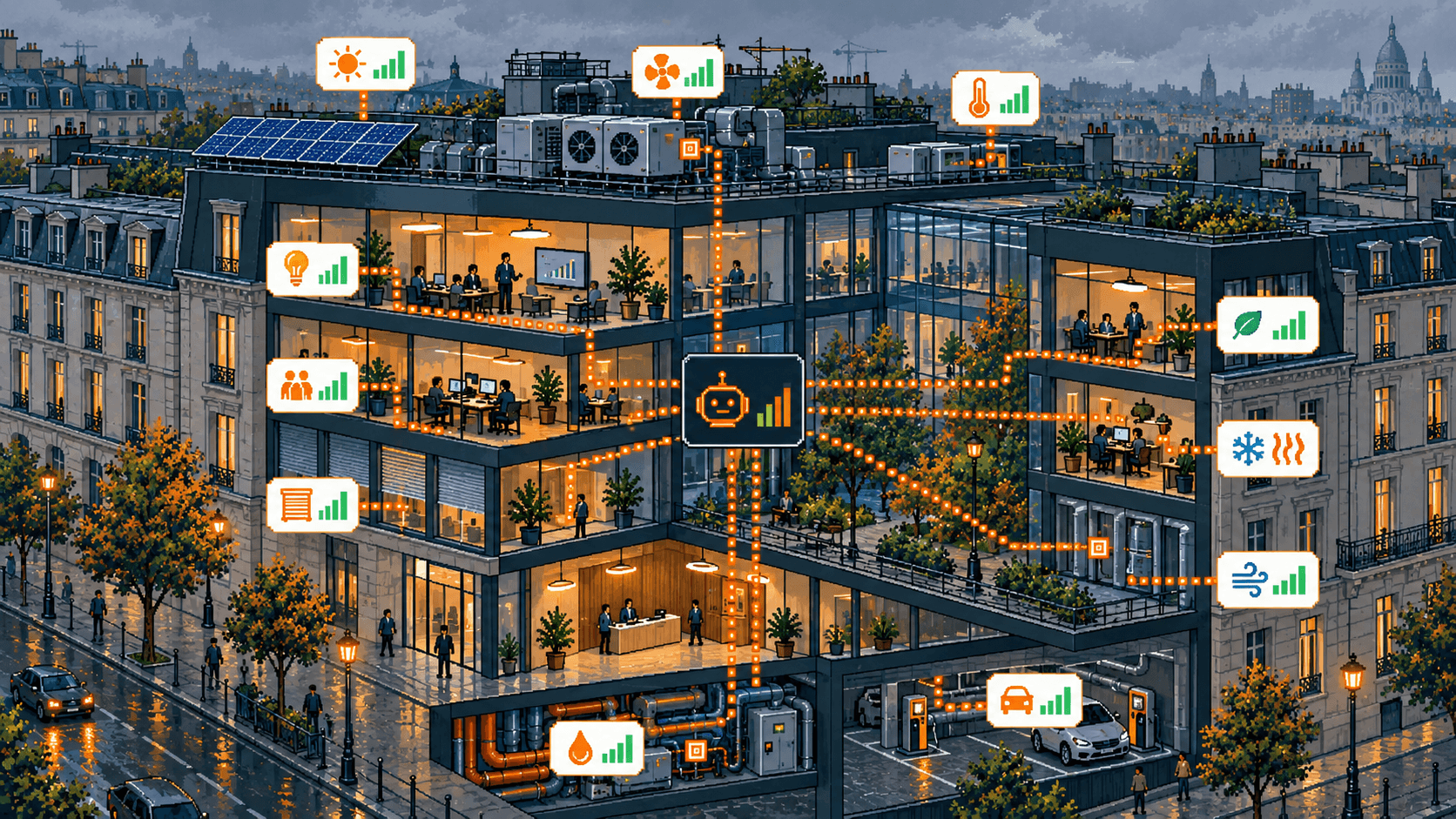
What is a smart energy management system (EMS)?
A smart energy management system (EMS) is an innovative technology solution designed to optimize how energy resources are used in buildings and businesses. The system interconnects a range of equipment and technologies, allowing precise control and effective management of energy consumption.
Definition and role of a smart energy management system
An EMS is a set of interconnected software and hardware that collects and analyses data on energy consumption. Its main components include sensors, controllers, and user interfaces, which together track energy use in a building in real time. The main goal is to improve energy efficiency while cutting the costs associated with electricity consumption.
How does a smart energy management system work?
An EMS works through the flow of data between the different components of the system. Sensors collect information on energy consumption, which is then sent to supervision software. That software analyses the data, identifies anomalies and inefficiencies, then sends instructions to the controllers to optimize energy use according to the specific needs of the business. The process delivers a high level of control over energy systems and maximizes the use of available resources.
Key features of smart energy management systems
Smart energy management systems offer a range of features that are essential to monitoring, analysing and optimizing energy consumption.
Real-time monitoring of energy consumption
An EMS allows real-time monitoring of energy consumption. That includes sensors collecting data on electricity use in different areas of a building. Putting that data to use makes it possible to identify inefficiencies and anomalies quickly, and so to react fast and effectively.
Automatic optimization of energy use
Smart energy management systems use predictive algorithms based on artificial intelligence to adjust energy requirements automatically. That means the system can anticipate fluctuations in energy consumption and adjust resources accordingly, cutting electricity costs and improving energy efficiency.
Integration with renewable energy
An EMS is designed to connect to renewable energy sources such as solar panels and wind turbines, as well as to battery systems for energy storage. It is common, however, for panels to be left disconnected for long periods, which limits how much energy they can generate.
Lower energy costs and a smaller carbon footprint
Adopting a smart energy management system brings significant economic benefits, chief among them lower electricity costs. By optimizing energy use, businesses can make substantial savings while helping to reduce their carbon footprint.
Types of smart energy management system, by application
Smart energy management systems are deployed in a wide range of contexts and applications.
Energy management in commercial and industrial buildings
Systems designed for large buildings, often called Energy Management Systems (EMS) or Building Energy Management Systems (BEMS), make it possible to manage several zones or complex pieces of equipment. Systems of this kind, Foobot among them, support the control of HVAC systems (heating, ventilation and air conditioning) and lighting, maximizing energy efficiency.
Microgrids and smart cities: energy management at scale
At microgrid scale and within smart city projects, an EMS is used to improve overall energy efficiency. It allows centralized management of energy resources, contributing to a sustainable energy transition.
Home Energy Management System (HEMS): energy management for individual homes
HEMS is a solution designed for households, bringing together connected devices and virtual assistants to improve the management of domestic energy consumption. It lets users track their electricity use and adjust their behaviour accordingly.
Technologies and standards used in smart energy management systems
Bringing in modern technology and complying with the relevant standards are both essential to the success of an energy management system.
The role of the Internet of Things (IoT) in energy management
The IoT plays a fundamental role in energy management, allowing connected sensors to be used for effective data collection. These devices support communication between systems and guarantee optimal data security .
Artificial intelligence and machine learning for energy optimization
Bringing AI and machine learning into energy management systems allows continuous optimization of resources. These technologies analyse data in real time to propose optimization strategies tailored to a company's energy requirements.
ISO 50001 and other energy management regulations
Complying with standards such as ISO 50001 is essential to guarantee the compliance and performance of an energy management system. These standards provide a framework for implementing effective energy solutions.
Cloud and cybersecurity
Using cloud based solutions to manage energy data offers advantages in flexibility and scalability. It is critical, however, to take cybersecurity into account, to protect sensitive data and keep systems safe.
Implementing a smart energy management system
Adopting an EMS calls for a methodical approach if it is to succeed.
The key steps in installing a smart energy management system
Installing an EMS goes through several key steps:
- Initial assessment : evaluating energy requirements and identifying areas of inefficiency.
- Planning and design : drawing up a plan for integrating the technologies required.
- Installation : putting the sensors, controllers and software in place.
- Post-implementation follow-up : analysing the data and adjusting the systems to guarantee their performance.
Costs and ROI of a smart energy management system
The cost of installing an EMS varies with the sophistication of the installation. In general these systems offer a good return on investment, with potential savings on energy costs that quickly offset the initial outlay.
Foobot, for example, plays a key role in the control and command of these systems, with a payback period ranging from 6 months to 2 years.
Challenges and obstacles to implementation
Implementing a smart energy management system can present several challenges:
- High initial investment : installation costs can be significant.
- Technical complexity and data integration : guaranteeing the accuracy of the data and the interoperability of systems is essential. An existing system that is closed or cannot be connected to the internet can make some deployments impossible.
- User adoption : success depends on user engagement, which calls for training and awareness-raising.
- Technical expertise required : managing the system effectively requires specialist skills.
- Scalability : the system has to adapt to future needs without major disruption.
Case studies: successful implementations of smart energy management systems
Energy optimization in commercial buildings
One concrete example is a large office building in Paris that installed an EMS. The initiative led to a 25% cut in overall energy consumption, generating annual savings of €150,000 on electricity bills. Occupants benefit from better comfort thanks to intelligent control of heating and lighting.
Energy management in a smart city
Dijon is an example of a city using an EMS to manage its energy resources effectively:
A high-performing public transport network, which helps cut the energy consumed by travel.
Eco-district projects, which generally include advanced energy management systems.
Particular attention paid to urban biodiversity, which can include nature-based solutions for energy efficiency.
The city describes itself as a "pioneer in the connected, sustainable management of its infrastructure". That points to the use of intelligent management systems, probably including a city-scale EMS.
While the specific details of Dijon's energy management system are not published, these elements indicate that the city has adopted a comprehensive, intelligent approach to managing its energy resources. That integrated approach, combining transport, urban planning, biodiversity and infrastructure management, is characteristic of an effective city-scale energy management system.
Why choose Foobot for your smart energy management system?
Foobot stands out as a leader in energy management, with solutions built on artificial intelligence.
The benefits of Foobot for optimizing HVAC systems
Foobot optimizes heating, ventilation and air conditioning systems, delivering precise control of energy consumption. That produces substantial savings on energy costs while maintaining optimal comfort.
Lower energy costs and better comfort with Foobot
Using advanced algorithms, Foobot can adjust indoor conditions every 15 minutes, something that would be impossible to do manually. The process guarantees consistent comfort while cutting energy costs.
Integrating Foobot with existing building technologies
The Foobot solution integrates easily with existing management systems and IoT technologies, and includes a free assessment of your building management system (BMS) to make the interface straightforward.
Conclusion: why adopt a smart energy management system?
Adopting a smart energy management system is essential for any business looking to optimize its energy consumption, cut costs and minimize its carbon footprint. These technologies offer a sustainable, effective solution for the energy future of buildings and businesses. Investing in an EMS means choosing intelligent, responsible energy management.
Back to blog